14 Savvy Ways To Spend On Leftover Buy A1 German Certificate Budget


Navigating the Path to A1 German Certification: Understanding Your Options
In today's interconnected world, discovering a brand-new language can open a wealth of opportunities, both personally and professionally. For those looking for to look into the German language and culture, obtaining an A1 German certificate is typically the first significant step. This certificate functions as official evidence of your primary German language abilities, showing your ability to comprehend and use familiar everyday expressions and basic expressions aimed at the fulfillment of requirements of a concrete type.
The A1 level, as specified by the Common European Framework of Reference for Languages (CEFR), marks the beginning of your German language journey. It symbolizes that you can present yourself and others, ask and answer questions about personal information such as where you live, individuals you understand and things you have, and connect in a simple way supplied the other person talks slowly and plainly and is prepared to help. For individuals preparing to immigrate to German-speaking countries for household reunification, for au sets, or just for those wanting to embark on language learning, an A1 certificate is an important and often required document.
However, the expression "buy A1 German certificate" typically surfaces in online searches, and it's crucial to understand the subtleties and ethical implications surrounding this terminology. While the concept of a quick and simple acquisition may be tempting, it's vital to separate in between legitimate paths to accreditation and possibly deceptive and even fraudulent offers.
This short article aims to provide an extensive guide to comprehending A1 German certificates, clarifying how to get them legitimately, and resolving the intricacies associated with the idea of "purchasing" one. We will check out the value of official accreditation, the reliable organizations providing A1 tests, the preparation process, and the possible mistakes of looking for faster ways.
Why Obtain an Official A1 German Certificate?
An officially acknowledged A1 German certificate holds significant value for various factors:
- Visa Requirements: For people looking for specific types of visas to Germany, Austria, or Switzerland, especially for household reunification purposes, proof of basic German language skills (A1 level) is frequently an obligatory requirement. Immigration authorities generally require certificates from acknowledged and trustworthy language evaluation suppliers.
- Au Pair Programs: Many au set programs in German-speaking countries require applicants to have an A1 German certificate to show their capability to interact on a standard level within a host household.
- Personal and Professional Development: Beyond official requirements, an A1 certificate is a tangible accomplishment that confirms your language learning development. these details can boost your self-confidence and act as a stepping stone for further language studies and profession chances, specifically in fields with global connections or German-speaking customers.
- Academic Purposes: In some cases, universities or universities might require an A1 certificate as a preliminary requirement for registration in specific programs or courses, particularly those related to German language and culture.
- Motivation and Goal Setting: Preparing for and passing an A1 exam provides a structured learning goal and a sense of achievement, motivating continued language learning and development.
Legitimate Pathways to A1 German Certification: Exams from Reputable Institutions
The only legitimate method to get an A1 German certificate is by successfully passing an official A1 German language exam administered by an acknowledged and credible institution. These institutions are licensed to conduct evaluations lined up with the CEFR and issue certificates that are extensively accepted and recognized.
Here are a few of the most globally recognized organizations offering A1 German exams:
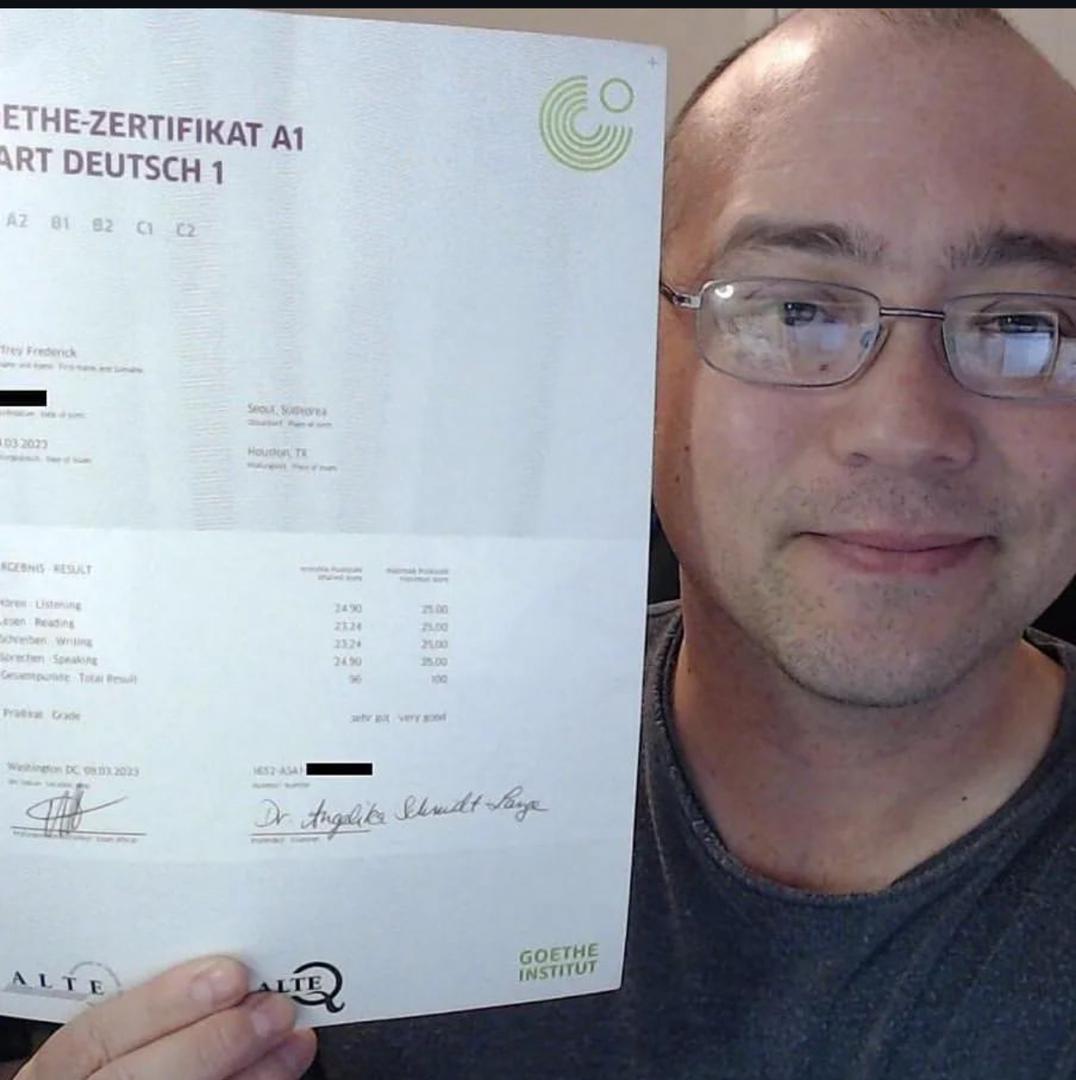
- Goethe-Institut: The Goethe-Institut is perhaps the most commonly acknowledged German cultural institute, with centers all over the world. Their "Goethe-Zertifikat A1: Start Deutsch 1" exam is extremely regarded and accepted globally as proof of A1 level German skills.
- Telc (The European Language Certificates): Telc provides a variety of language exams throughout numerous languages, including German. Their "Telc Deutsch A1" exam is another well-respected certification for the A1 level.
- ÖSD (Österreichisches Sprachdiplom Deutsch): The Austrian Language Diploma (ÖSD) offers worldwide acknowledged German language certificates. Their "ÖSD Zertifikat A1" is specifically created for adult learners at the A1 level.
- TestDaF-Institut: While mostly known for the TestDaF exam for college, the TestDaF-Institut likewise offers the "Deutsch-Test für Zuwanderer A1-B1," that includes an A1 level element. This exam is frequently utilized in the context of integration courses in Germany.
How to Prepare for and Take an A1 German Exam:
Obtaining an A1 certificate needs committed preparation. Here's a general summary of the process:
- Language Learning: Enroll in an A1 German language course, make use of online resources, language finding out apps, or self-study materials. Focus on building a standard vocabulary, understanding fundamental grammar structures, and practicing simple conversational expressions.
- Exam Preparation: Familiarize yourself with the specific format and requirements of the picked exam (e.g., Goethe-Zertifikat A1, Telc Deutsch A1, ÖSD Zertifikat A1). Many organizations provide practice products, design tests, and preparatory courses designed to assist you succeed.
- Registration: Choose a certified evaluation center from your chosen organization. Register for the A1 exam on their website or in individual, paying the needed exam fee.
- Exam Day: Attend the exam center on the scheduled date and time. The A1 exam typically evaluates four essential language abilities:
- Listening (Hören): Understanding basic conversations, statements, and everyday situations.
- Reading (Lesen): Comprehending short, easy texts, messages, and signs.
- Writing (Schreiben): Filling out standard types, writing short personal messages.
- Speaking (Sprechen): Introducing yourself, asking and addressing easy questions, and taking part in basic conversations.
- Results and Certificate: After the exam, you will receive your outcomes within a few weeks. If you pass, you will be awarded the official A1 German certificate from the providing organization.
The Misconception of "Buying" an A1 German Certificate
The expression "buy A1 German certificate" frequently leads individuals to websites or services claiming to use certificates for purchase without the need for an actual exam. It's essential to comprehend that these offers are highly most likely to be deceptive and unethical.
Why "Buying" a Certificate is Problematic:
- Lack of Authenticity: Certificates acquired through such ways are not genuine and are not recognized by main organizations, companies, or migration authorities. They are essentially fake files.
- Legal and Ethical Implications: Using or providing a fake certificate can have serious legal effects, consisting of visa application rejection, job loss, or perhaps legal charges associated with fraud and forgery.
- Deception and Misrepresentation: Presenting a bought certificate misrepresents your real language abilities and can create troubles in circumstances where genuine interaction skills are needed.
- No Real Language Proficiency: Even if a phony certificate is acquired, it does not grant you real German language abilities. This will eventually hinder your integration, interaction, and chances in German-speaking environments.
Focus on Genuine Language Acquisition and Certification:
Instead of looking for shortcuts that are ultimately harmful, the focus ought to always be on authentic language learning and getting certification through genuine methods. Investing time and effort in finding out German and getting ready for an official exam is the only ethical and efficient path to getting an acknowledged A1 certificate.
In summary: While the desire to rapidly obtain an A1 German certificate is reasonable, particularly when facing due dates for visa applications or other requirements, it is essential to approach this procedure ethically and lawfully. Concentrate on learning German, prepare for an official exam from a reliable organization, and make your certificate legally. This method will not just supply you with a recognized document however likewise equip you with real language skills that will be vital in your individual and expert ventures. Real effort and accomplishment are always more rewarding and sustainable than seeking misleading shortcuts.
Regularly Asked Questions (FAQs) about A1 German Certificates:
Q1: What is the A1 German certificate and what does it show?
A: The A1 German certificate is a main file validating that you have actually attained the A1 level of German language proficiency, as specified by the CEFR. It proves you can comprehend and utilize very basic German expressions and expressions for everyday situations.
Q2: Can I truly "buy" an A1 German certificate online?
A: While you might find websites declaring to offer certificates, these are likely phony and illegitimate. Authorities A1 certificates are just issued by recognized organizations after you effectively pass their exam. "Buying" a certificate is dishonest and potentially illegal.
Q3: Which institutions offer recognized A1 German tests?
A: Reputable organizations consist of the Goethe-Institut, Telc, ÖSD, and the TestDaF-Institut (for the Deutsch-Test für Zuwanderer A1-B1). Certificates from these institutions are widely recognized and accepted.
Q4: How long does it take to get ready for the A1 German exam?
A: The preparation time differs depending on your knowing rate and prior language discovering experience. Generally, it might take around 80-100 hours of study to reach the A1 level and prepare for the exam. This can be achieved through courses, self-study, or a mix of both.
Q5: What is the format of the A1 German exam?
A: The A1 exam typically includes 4 sections: Listening, Reading, Writing, and Speaking. Each area examines your ability in that specific skill at the A1 level.
Q6: How much does the A1 German exam expense?
A: The exam charge varies depending on the organization and the assessment center. It usually varies from EUR80 to EUR150. Inspect the website of your chosen organization for specific rates in your place.
Q7: How long is an A1 German certificate legitimate?
A: A1 German certificates from trustworthy institutions generally do not have an expiry date. They are considered evidence of your language efficiency at the time of screening. However, for particular visa applications, immigration authorities may have specific requirements regarding the age of the certificate.
Q8: Do I require an A1 German certificate for a German visa?
A: It depends upon the kind of visa. For household reunification visas, an A1 certificate is frequently mandatory. For other types of visas, it may be beneficial however not constantly needed. Constantly check the specific visa requirements of the German embassy or consulate in your nation.
Q9: Where can I find preparation materials for the A1 German exam?
A: Reputable organizations like Goethe-Institut, Telc, and ÖSD provide official practice products, model tests, and textbooks particularly developed for their A1 examinations. You can find these resources on their sites or at language discovering bookstores.
Q10: What if I fail the A1 German exam? Can I retake it?
A: Yes, if you do not pass the A1 exam, you can retake it. You will need to register and pay the exam fee once again. It's suggested to evaluate your weak locations and prepare further before trying the exam once again.
By understanding the legitimate paths to A1 German accreditation and focusing on genuine language learning, you can effectively achieve your language goals and obtain an acknowledged certificate that opens doors to new chances. Bear in mind that the journey of language knowing is as valuable as the location itself.